Saturday, 21 August 2010

Burkhard Schittny Wins LPA Urbanscape Bronze Award

LPA Urbanscape Series Bronze Winner

Burkhard Schittny has worked on personal photography projects throughout his career, even whilst focused on working as commercial photographer for advertising and magazines between 1997 and 2007. In 2007, he decided to concentrate fully on fine art.

In the winter of 2007, Burkhard travelled to New York City. "When I started filming I didn't have a real concept in mind," he says. "I just wanted to do something. Later, after selecting the stills and working on them on the computer, I realised most of them had a gloomy, murky touch. The series, now called UNTITLED, somehow came back to ideas and feelings I had when I was creating the video performances for my MA at Central St Martins: desperation, insecurity, anonymity and alienation. The stills are like scraps of memory struggling to reveal the fear of a place - fragmented and out of focus."

For these projects, Burkhard films on a consumer video camera, selecting the images on a computer. All images are full frame with no composing, just colourshifting and saturation and desaturation in photoshop. "I keep the characteristic interlaced lines that video creates," he says. "Ideally, the work should be viewed in large scale to understand the construction and deconstruction of the subject."

Burkhard is currently working a series of around 20 new images from different places. He received a project grant from a German organisation for his landscape series and will use the funds to shoot a project about trauma and his own family history in Poland. He hopes to exhibit his UNTITLED series in the near future.

Burkhard Schittny LPA Portfolio and Profile

Paul Gorman Wins LPA Landscape Competition

LPA Landscape Series Gold Winner

Paul Gorman's University tutor encouraged him to enter these winning images - created for a University project - into competitions. "He said my images would win, but I didn't take him seriously," he says. "But lots of people seem to like them and I am very proud I have created them." Paul is currently studying BA Honours in photography at AUCB in Bournemouth

The images were all taken at sunrise or sunset. "The light is amazing at that time and is best suited for landscape," says Paul. "The images are about how we interact with the surroundings and how we direct our vision to objects within the landscape. I wanted to create something that shows how our perceptions can change as we move around, and - through multiple exposures - show how these new perceptions merge with existing ones. I wanted to make the viewer engage with the work in a similar way to how we get a feeling of the sublime when we are in the landscape."

Paul was inspired by Picasso's attempts to show the flatness of the canvas by using lots of different viewpoints on the same images. "I thought it would be great to circle the tree or ponds and take a picture at various points around it," he says. "The backdrop builds up, creating a weird and wonderful world, almost like a dream scene that baffles and challenges the viewer. The more you look, the more you notice." The images were all taken with film.

After graduation, Paul hopes to travel in order to study the theme of human vision.

Craig Easton Wins LPA Landscape Silver

LPA Landscape Series Silver Winner

Craig Easton selected the images which won Silver in our Landscape Series entry competition from the beginnings of a new project which follows on from the success of his book ’52 Weekends by the Sea’. "For me, landscape photography is not about what it looks like, but what it feels like," he says. "The pictures are about the essence of the British countryside, what makes it so special and so different to other landscapes around the world. Space is often at a premium in the UK and these pictures are not just about the landscape itself, but about our influence on it, how we have shaped it and how we live or have lived within it."

Craig's career began in the early 1990s as a photojournalist at The Independent, shooting black and white film and making wet prints in the basement darkroom. Since then, he has shot a lot of commercial and advertising work, alongside books and magazine editorial. Landscape has always been a big part of his work. He recently shot a campaign of sportspeople in iconic British locations. "Whilst these were portraits, they required a really strong sense of the landscape, connecting the British landscape with the 2012 Olympics," he says.

Craig's book ‘52 Weekends by the Sea’ has been shortlisted as a top 5 finalist in the British Book Awards. The associated website www.52hq.co.uk is the beginning of an exciting online community celebrating the British coast.

Craig Easton LPA folio and Profile.

Peter Adams Wins LPA Landscape Bronze

LPA Landscape Series Bronze Winner

Peter Adams's Bronze winning series are aerial photographs taken in Namibia. "This was the first time I've done any aerial pictures," he says. "I was blown away by the new perspective. The pictures here are some of the more abstract from the series; I was particularly enthralled by some salt works. The amazing colours and patterns reminded of the paintings of Mark Rothko."

Peter started his career in 1986, working for design studios, advertising agencies and corporate clients, before concentrating on travel photography. He was awarded Travel Photographer of The Year in 2003. He recalls a commission from his early days as a photographer: "I enjoyed an extended job for a company that made uniforms and work wear. The fire brigade were good enough to set up situations for me. We shot hunting clothes in great light on The Mendips and had great difficulty finding a suitable model for a 18 stone, 5’ 5’’ king of a small African nation! It was all good experience and a steep learning curve."

Peter currently has some limited edition fine art prints coming out through an international gallery. He is working on several ideas for a book (with the possibility of an accompanying exhibition) and hopes to base some of his forthcoming travel plans around these projects.

Peter Adams LPA Portfolio and Profile.

Universal Music Group Clashes with MTV Over Music Videos


Universal Music Group (UMG), the world's biggest record label with hit artists Black Eyed Peas, Lady Gaga and Rihanna, among others, has pulled its music videos from the websites owned by MTV Networks (MTVN).

MTVN, which arguably established the concept of music-TV channels worldwide, including the original MTV, also transmits music videos on the internet. Its most popular websites are MTV.com, CMT.com and VH1.com.

MTVN has always negotiated directly with record companies for its websites' videos. Until last December, when UMG joined forces with another major label Sony Music Entertainment and Abu Dhabi Media Company to launch Vevo, an online streamed music-video syndication service.

UMG is insisting all websites wanting UMG videos must take them from only Vevo. And until its websites comply, MTVN is now allowed to show UMG videos.

In a statement, UMG said it believes it can make more money syndicating its artists' videos through Vevo. It said: "Vevo… is the best way to maximise revenue for our artists, our songwriters and ourselves, while bringing our videos to the widest possible audience."

Negotiations were said to be ongoing and industry observers are also waiting to see if Sony will also want to remove its videos from MTVN sites.

Photography by Agnieszka Zychska

Buying Spree in UK Film and TV Sectors

The season of acquisitions in the UK film and TV industry is here. Hollywood studio Time Warner is now the majority owner of Shed Media, its first investment in a UK independent TV-production company.

According to media reports, the entertainment giant has acquired a 55.75% stake in Shed Media, valuing the latter at £100 million. Shed Media produces international TV franchises Supernanny and Who Do You Think You Are?

All3Media, creator of popular international TV dramas Midsomer Murders and Skins, is reported to be buying Optomen TV. Optomen is another indie production house famous for making culinary shows starring TV chef Gordon Ramsay.

These developments follow the acquisition of UK indie RDF Media by Zodiak Entertainment, a rapidly growing international media group, in June.

Meanwhile, another British institution could be affected by the sale of Hollywood studio Metro-Goldwyn-Mayer (MGM), which is still desperately looking for a buyer to take on its $3.7 billion debt. It's been on sale since April.

Its financial woes could lead to the postponement of the next movie in the James Bond series, which is produced by the Broccoli family-owned EON Productions.

Scheduled to be filmed at the UK's Pinewood Studios, the movie will be directed by Oscar-winner Sam Mendes.

Photography by Agnieszka Zychska

Tuesday, 27 July 2010

LPA Competition's for Landscape and Urbanscape


LPA Competition's for Landscape and Urbanscape are closed for entry
and the judges are making their choices.

The Judges are,

Lucy Bell - Owner / Curator of Lucy Bell Fine Art Photography Gallery & Agency.

Sue Golden - Curator, editor, artist and photographer.

David Edmunds - Curator at Gallery 1839

The winners and finalists will be notified by email by Monday 2nd August.
Interviews with the winners and full galleries will be posted by 23 August.

Photography by:

Marrigje de Maar


Saturday, 12 June 2010

The Art & Craft Of Photographer David Knight


Art and Craft
Of
David Knight

Classically trained in the craft of photography, David Knight is now turning to his artistic side to inspire his advertising work and create a distinctive style.

David Knight has experienced plenty of change in his photographic life. The English-born photographer has worked in both Dubai and Australia.

He was trained in traditional photographic techniques only to then watch digital imaging slowly but surely replace film. And, in his chosen field of advertising photography, budgets have shrunk and a bit of smart software has taken over from time-consuming camera work, set-building and creative problem-solving. At the same time he’s been steadily trying to spend more time on personal projects, an area he confesses to having let slip for too long as he worked hard to get established as an advertising photographer in Australia.

Now, David says, the value of pursuing personal work cannot be underestimated as it helps with the development of a style which, in turn, informs a photographer’s commercial work.

“For a number of years there I had really neglected my own stuff and I was focused just on the advertising work. But I was having withdrawal symptoms so I had to get back to it. My advertising work didn’t really have a set style; it was just whatever the job required so I was a bit of a chameleon there. These days I’m trying to work more on my own stuff and hopefully getting awarded jobs where people are looking at my personal work and wanting to buy into that style. So, I think that, with time, my style will become more and more defined. I find it more rewarding and I feel a lot more invested in my work.”

David also believes that – no pun intended – the wide exposure of personal work is also important so he maintains a Website, but also employs ‘old-school’ promotional strategies such as sending out printed material. He also participates in photography awards, both locally and internationally, most recently making it into Taylor Wessing Photographic Portrait Prize exhibition at the National Portrait Gallery in London.

Vocational Training

Born a bit further up the River Thames at Oxford, the young David Knight wanted to be an artist, but then his mind was rapidly changed by the realisation that at career in fine-art would almost certainly involve teaching, a prospect that filled him with dread.

“One of my friend’s father was my art teacher and I remember, one day sitting, sitting under a tree with this friend – probably smoking –when we saw this man jumping around trying grab branches off another tree.Then my mate suddenly said, ‘Shit, that’s my Dad!’. He was collecting stuff for an art class and, there and then, I decided that that was something I definitely didn’t want to do.

“The thought of teaching absolutely terrified me so I began thinking about what else I could do that would still allow me to be visually creative. Then, at the end of my art course, there was a bit of photography and I think, like many people probably, I was absolutely hooked when I first watched a print developing in the tray. I thought it was magic and I never looked back from there.

“I then went to the Cheltenham & Gloucester College – there were two big vocational colleges in England at the time and it was one of them – and I chose there because it was a very structured course and they were specifically gearing you up to find work, either as an advertising photographer or an editorial photographer. A lot of the degree courses at the time were very arts based and weren’t so focused on teaching you how to use cameras or lighting.

“I was there for a couple of years, then I did the usual freelance assisting thing and then I got a full time job with a couple of photographers. One was Ian Fraser who was an all-round commercial photographer, but he was doing a lot of cars. And the other was Ben Campbell who was more people-focused and he was doing quite edgy fashion stuff. So I got experience in a good mix of things. Both were quite technical and loved the craft of photography which was a very good training.”

This was still in the days of film… “Digital wasn’t around at all at that point”. David was using roll film and 4x5-inch sheet film so he remains a “big camera” person and says that even for his personal work his approach is still “more considered” as learned from many years of using a Sinar view camera.

Chasing The Sun
Like many aspiring young Britons in the mid-1990s, David began to look beyond the shores of his homeland for somewhere he could get established professionally, although he says that his choice of Dubai was mainly influenced by the appeal of a warmer climate.

“England is bloody cold in winter. Basically all my friends had left and gone to other places and I was living in a share house and so one particularly freezing day I thought there’s got to be somewhere warmer. My sister was living in Dubai so I went there for a holiday. I didn’t like it much at first, but back in England, I was encouraged by Ben – who’d grown up in Bahrain – to give it a go so I did.

“Initially I offered to assist, but within six months I was shooting on my own, there was just so much work around. And it was very diverse too. You’d be hanging out of a helicopter one day, the next on a tug in the port and then you’d be working with a creative director from one of the major advertising agencies. You had to wear many hats which made it quite fun. And then, of course, there were the mountains and the desert right on your doorstep with all these fabulous places you could go and explore. And you could still really drive wherever you liked then so it was a great time both personally and professionally.”

David worked in Dubai for nearly four years, before deciding to move on… this time to Australia.

“Again,” he confesses, “the main reason wasn’t really anything to do with career advancement, but if I’d stayed I would have had to find a sponsor and get set up myself which required a big investment in both time and money.

And it was a very transient place so it’s hard to feel settled there and I was really ready to go anyway. Australia was on the top of the list because I’d always wanted to go there.”
Gaining a foothold in a well-established market that’s also quite small and reasonably close-knit must have been something of a challenge.

“Yes, I think it was although, compared to Dubai, Australia seemed like a massive place. In Dubai it was sufficient to go to the pub, chat to a few people and the grapevine would do the rest. At that time, everybody knew everybody. So, when I came here, I decided to get an agent to help get me work and then, a bit later, I dispensed with having an agent and instead had a freelance producer which worked very well for me for a couple of years. But, yes, it was hard initially to break in.”

Commercial Reality
David selected a vocational training course over an arts degree because he wanted to understand the
‘nuts and bolts’ of his chosen profession and to be able to operate a viable business. So he always intended to
be a commercial photographer and advertising work appealed in particular.

“I like having control,” he states simply. “I like to set things up. I like to construct a photograph and with an advertising shoot everybody is on the payroll basically. So there’s a great team spirit where everybody is working towards the same thing. You don’t need to cajole people into doing what you want because everybody is there for one purpose which is great. And while I have been moving more towards the art side, I’m certainly not going to stop doing advertising. Hopefully they’ll compliment each other and keep me inspired for longer… and hopefully they’ll be a crossover of ideas back into advertising.”

He’s become more convinced of the need for a distinctive and definable style as the nature of advertising photography has changed significantly, for both technological and economic reasons.

“There’s been a convergence of things going on. Firstly, we’ve transitioned nearly fully from film to digital, but there were a few years there where things were basically in limbo and it wasn’t really clear where we would go… so you didn’t know where to put your money as far as making big investments in gear was concerned. It was quite a relief when digital imaging got to the point of being, in commercial photography terms, the benchmark.

“Then there’s been a gradual reduction in budgets every year. The eighties and the early nineties were synonymous with massive budgets – almost the champagne era if you like – and I came in at the end of this and pretty much missed the whole thing! But budgets were certainly a lot healthier at the start of my career and they’ve been getting leaner as the years go by. Not that I feel it quite as much because, of course, as you do get older and more experienced you do get some bigger jobs. But I’m sure that 15 years ago we’d have been making three or four times as much money.

“Retouching has added another element in that why would you allow a photographer to absolutely perfect something over two or three days – as a car photographer in a studio would once have done – when two minutes on the computer will fix the problem?

“So, if you don’t bear this in mind, you just won’t get the job in the first place… it’s just a commercial.

Willing Convert

Despite his darkroom ‘revelation’ and training in film based photography, David Knight says he was a fairly willing convert to digital capture once it could deliver enough image quality.

“My first introduction to it was back in Dubai when we had a Phase One salesman come and give us a demo, and that would have been all the way back in 1996. Very early days, and really the only application for it was studio ‘churn and burn’ product photography where the images were only going to end up small.

“So it really wasn’t ready at that point, but I understood the concept of it so I did jump in with some early Canon cameras, although the quality wasn’t there. For me, it finally became viable when Canon brought out the EOS-1Ds Mark II – the 16 megapixels camera – and I bought one of those and first started shooting personal work with it, but then I used it for some commercial jobs and the results were pretty good. But I didn’t become fully committed until I bought a Hasselblad H2 four years ago.”

So, given how much can now be done on a computer – and with more to come with CGI – on balance has digital imaging been a good or a bad thing for advertising photography?

“For a while I was on the fence, but I think that, overall, it’s been fantastic. Ultimately, it’s just another method of recording an image and most of the work is still done in front of the camera with the composition and the lighting, and how you direct if you have talent in the shot. Whether it’s film or it’s digital, if you haven’t done all those other things right, it’s immaterial anyway. And I think everybody forgets, as well, that for quite a while film was scanned and put into the computer and worked on in exactly the same way. But I understand that some people still favour film because it’s obviously got a different look and perhaps it’ll
make a resurgence because of this, particularly on the art side. For me, though, the commercial realities are obvious, starting from just knowing that you’ve got the shot, knowing when to stop shooting and having the client sign it off there and then.”

Creative Control
David contends that having a strong photographic ‘identity’ is important in the advertising world, especially in terms of photographers being able to play a key role in the creative process rather than simply being directed.

“Well, you would hope that a client has already bought into what you do by seeing your work, so perhaps the discussions about creative direction don’t need to be had quite as much. This is definitely where having a more united voice or a clearer style helps… if your work is similar and consistent throughout, the clients come to you for that look.”

Which, presumably, is why self-promotion is so important so your work is seen frequently and so potential clients understand what you’re all about and how you shoot.

“Absolutely, but I neglected this for years. I think I was probably too busy shooting and not really thinking about it, but what I realised, I think, was that if you want to get a certain type of work – and you want to drive your career in a certain direction – then you really have to take the lead and you have to be very clear yourself about what it is that you’re doing so that other people can see that. Hopefully, the work will follow in that direction and, of course, you’ll be a lot happier with your work because you’ve driven it to an area you want to be doing.”

Having weathered the many changes in photography over the last 20 years and still managed to be successful in two very different markets, David Knight says he still has plenty of creative goals that he’d like to achieve. Not surprisingly, one of them is to be able to do more personal work, but still get paid.

“I suppose the very act of supporting yourself by doing what you love is a good thing… and not so many people truly, truly enjoy their work. But my ultimate goal – and it’s probably the goal of most photographers – would be to find a way to still make money only working on your own projects or on those you really wanted to do. And I’d like to have more time to do personal things… like riding around the world on a motorbike.”

Photograph | Finalist, Australian National Portrait Prize, 2007


Edition: April 2010
ProPhoto magazine: www.avhub.com.au
Publisher: Next Media. www.nextmedia.com.au
Editor/Technical Editor: Paul Burrows
Interview and article by Paul Burrows

Monday, 31 May 2010

The Death Of Commercial Photography


The Death Of Commercial Photography

For those of you who follow the LPA you will know that I have been talking about the convergence of stills and moving images for some years now.

Having been around in commercial photography for a while I have witnessed the following 'deaths', or at least 'close calls'.

'death of the glass negative'
'death of black & white'
'death of dye transfer printing & retouching'
'death of the presentation slide'
'death of the pre computer photographic creative industry'
'death of the transparency for reproduction'
'death of E6'
'death of film period'
and arriving next week…. 'death of photography'

The death of commercial photography is a very contentious point and open to lively debate, but this is roughly how the industry has changed over the last forty years.

My point is that things have never stood still in photography. However, the rate at which our practice is now changing (due to the electronics industry) is frighteningly fast and one should be mindful not to get left behind.

We have interviewed two of our long standing LPA members who are working with moving pictures and I hope that photographers reading the interviews will take a positive view of the way forward.

Robert Dowling
Award-winning photographer Robert Dowling has been working in moving images since 1976, producing commercials, documentary and self-generated film. He gives his advice on getting ahead in an
industry on the up……. more

Philip Lee Harvey
Award winning travel photographer Philip Lee Harvey started to produce video four years ago.
"My prediction for the future of the industry is that photographers will be missing out if they don't offer moving images," Philip says."….more

Kevin O'Connor
Director LPA

Photography by Darren Hepburn - Title: Near the edge

Saturday, 29 May 2010

Philip Lee Harvey Discusses Shooting Video


An interview with top travel photographer Philip Lee Harvey talking about shooting video

Digital has been opened up to competition by connected networks, technology and web use. Many photographers have started to do a lot of video work, shooting high definition video on stills cameras. This added usage adds value to what you can offer clients, says Philip. "You're adding another string to your bow," he says. "I think we will soon be expected to be able to provide that content as well as stills."


Read the full interview here

Philip's LPA movingPictures showreel

Will Wilkinson gains Associateship of the RPS


Will Wilkinson gains Associateship of the RPS

Will submitted his ongoing project 'Thoughts On A Blackboard'.

Choosing to photograph people in the Arts such as actors, musicians and artists, I provided them with a blackboard and chalk and asked each person to write down what they were thinking at that moment. I then photographed them with their blackboard thought, so that there would be no doubt in the mind of the viewer what the subject was thinking when they were having their photograph taken.
Finally, I recorded them while they elaborated on the words that they had written on the board, giving a greater insight into what was on their mind. Their explanation sits alongside each photograph in this book.

Here's the link to the book on Blurb 'Thoughts On A Blackboard'.

Thursday, 27 May 2010

LPA Student Member Luke Smith Wins Gold At AOP


Luke Smith has been crowned the AOP Student Photographer of the Year 2010.

The idea behind the single image of the naked woman falling came from reading the work of 19th century German philosopher Friedrich Nietzsche who spent the 1870’s deliberating this question of what is truth. Nietzsche believed that truth cannot be recognised stating that everything that is knowable is an illusion. He declared knowing always involves creating transference of meaning which people associate with metaphors. The reason that all knowledge involves metaphors is that knowing is supposed to be “the adequate expression of an object in the subject. And since the “subject” and the “object”, the “knower” and the “known” are imagined to be radically independent of each other, knowing always demands a “transfer” or a “copy-over” from one sphere into the other. This is seen as concept formation and it is these concepts that construct our world and our reality. Nietzsche viewed this concept as the creation of illusion meaning that there are no absolutes.

I considered through the creation of this image the reality of ones world without metaphors and wanted to illustrate this through the subject being naked and falling into nothingness to illustrate ones reality without illusions. I chose the formula of a high ISO so even what you see in front of oneself begins to denigrate encasing the subject within its illusion reasserting and reaffirming that all is construction and myth.

The idea behind the series of portraits came from reading the book Dorian Gray and staying forever young. I believe we live in a culture obsessed with staying young and it is this that can generate fear and crisis for many and can create ones own vanity. The images illustrate an individual who slumps deep in the blindness of vanity consumed by his putrid futility. It shows him straining to seek anything but vacillation. As you walk through the series of images it shows him wrenching from this conviction reaching out past his abyss to what he really is. It illustrates his own image being ruptured from its crux. No longer being condemned showing his body becoming unstrung, entering a new beginning and embracing each fleeting moment , illustrating his own destruction of vanity.

Tableau photography is the genre i predominately work in and would hope to move forward with, in a career as a photographer. I have been influenced greatly by artist such as Jeff Wall, Hannah Starkey and Tom Hunter and hope that i could possibly gouge out a career similar to theirs. Within my work i like to explore the individual, how we are influenced by our world, its social issues and the impact of culture upon us.

Luke Smith LPA Portfolio

Tuesday, 25 May 2010

Paul Ryan interviews Director & Photographer M.T. Adler


Ginger - here is an out take of the interview we held with M.T. Adler last Friday. This is the first of a series of interviews we intend to produce featuring LPA movingPicture members - we will also offer this as an add on to our marketing and PR platform.

We had so much fun doing this, partly due to Paul and Marisol getting so well. Marisol is such an interesting artist and we are going to have a tough time editing down the footage. Our production team consisted of,
David Edmunds, Creative Director LPA movingPictures: on Mike
Paul Ryan, writer & interviewer:
Tony Campbell, cameraman and editor:
Laura Stark, location:
And me of course taking the dodgy out takes.

We hope to have this edited and ready for publishing in about two weeks time,

Wednesday, 19 May 2010

London Photographic Association Awards -The Nude

The Nude - Competition Results

The subject of our latest competition - The Nude - is one which has a long history within art and photography. As we said in the brief for the competition, history has seen all sorts of bodies appear as nudes in photographic work.

A good image of a nude needs to offer us something new, by experimenting with a specific idea about imaging the human body.

We hoped asking photographers to use the nude body as a subject would fire the imagination, encouraging them to go beyond familiar ideas to create something compelling and perhaps even fun. 
Here are the winners' along with links to their winning work, portfolios and interviews.


Series Category

Polly Penrose - Gold - Interview

Jorge A R Gamboa - Silver - Interview

Vanessa Alami - Bronze - Interview

Single Image Category

Jorge Retana Madrid - Gold - Interview

Ginger Liu - Silver - Interview

Jayne Dennis - Bronze - Interview

With thanks to Sue Golden and David Edmunds for judging this competition.

Galleries of single and series winners and commended photographers.

Photograph by: Jorge Retana Madrid- Gold

Tuesday, 4 May 2010

Monica Orozco “It Lasted 16 Outfits”

“It Lasted 16 Outfits”

Is a re-enactment of five weeks of my misadventures in dating in L.A. The first bloom of love may fade quickly, but a good outfit lasts forever. These self-portraits were shot in the exact places where Mr. X and I went on our whirlwind mini-romance and offer a peek inside the female side of the ritual: the mating dance, the dressing game, the spectacle, the theater. Are the outfits a shield for or a reflection of the woman within? Who knows.
Who was he? Does it matter? The fact is that love is a many splendored thing. And SHE wears many many outfits.

"It Lasted 16 Outfits"
Photos by Monica Orozco
ArcLight Cinemas Hollywood
6360 Sunset Blvd.
Los Angeles, CA 90028

Exhibit will run April 30th thru June 16

Reception
Thursday, May 13, 2010
7:00pm-10:00pm

ArcLight Theater Parking Validation $2 first 4 hours
RSVP not necessary

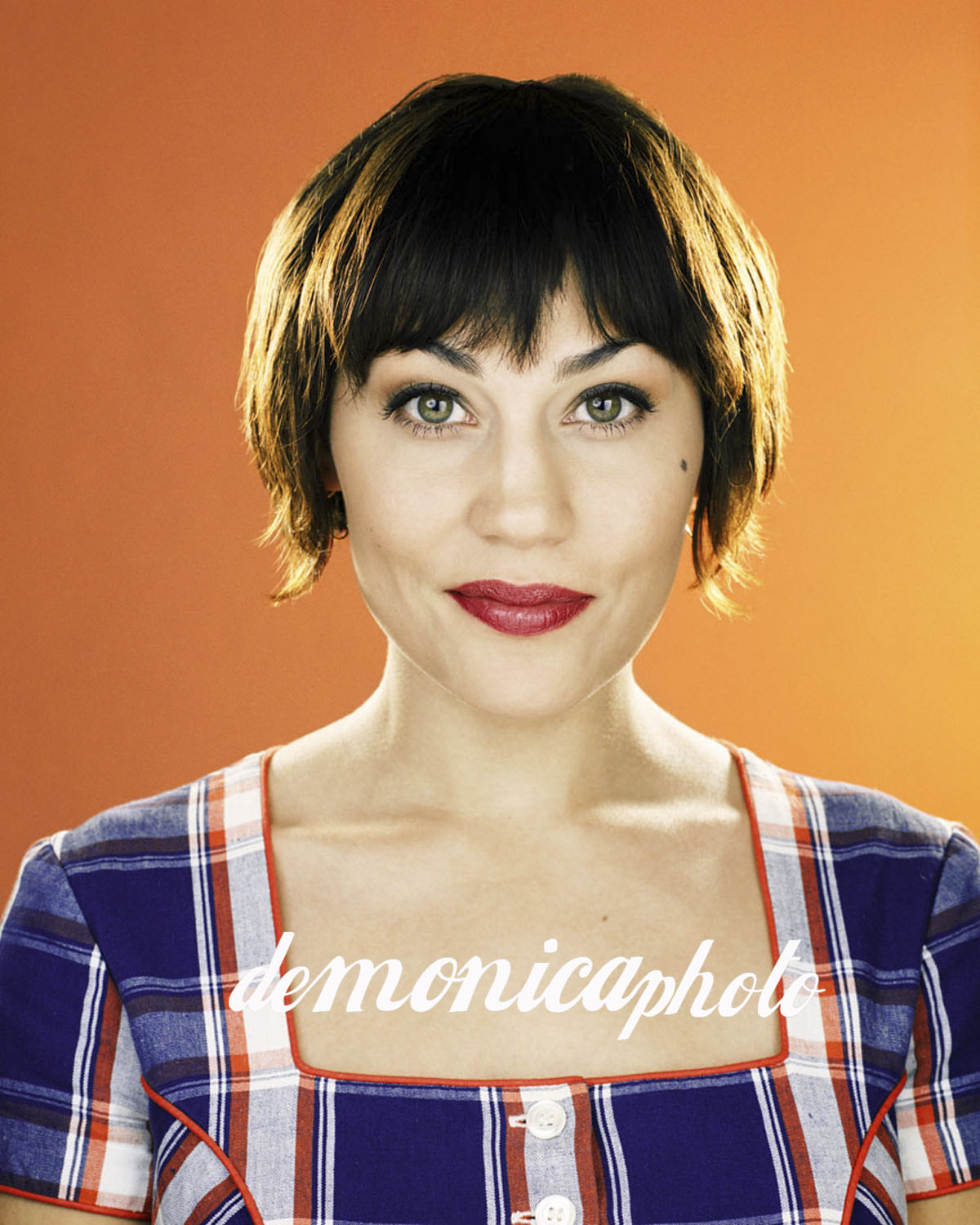
Monica Orozco - "De Colores—Portraits of L.A Women"


“De Colores-Portraits of L.A. Women”

An ongoing project that showcases eye-popping portraits of the “wonder women” of my hometown, Los Angeles.
Beautiful, diverse, strong, and fearless; they inspire me endlessly. These are the angels (and demons) of the City
of Angels I know and love. Reflecting the individual spirit of the project, each wonder woman is shot before a
backdrop of her favourite hue. This deeply personal project is an homage to my hometown and an expression
of appreciation for the beauty and strength of wonder women everywhere.

"De Colores—Portraits of L.A Women"
Photos by Monica Orozco
ArcLight Cinemas Hollywood
6360 Sunset Blvd.
Los Angeles, CA 90028

Exhibit will run April 30th thru June 16

Reception
Thursday, May 13, 2010
7:00pm-10:00pm

ArcLight Theater Parking Validation $2 first 4 hours
RSVP not necessary

Saturday, 1 May 2010

Ecohealth 2010 Schools Photography Competition


Enter Ecohealth 2010
Schools photography competition for 11-16 year olds

Anyone aged 11-16 can enter photographs into this themed competition run by the London School of Hygiene and Tropical Medicine and the London Photographic Association (LPA).

Winners from two age categories will have their winning photographs exhibited at the international Ecohealth 2010 conference in London and online at the LPA website. Winners will also be given prizes from the Wildlife Trust and Natural England.

Call For Entry Closed 2nd July 2010

Further information here

Wednesday, 28 April 2010

Ginger Liu Exhibits in LA - Framed Stories


New Puppy Gallery & drkrm/gallery
presents

FRAMED STORIES

Photographs


New Puppy Gallery in collaboration with drkrm/gallery present “Framed Stories” an exhibition of photographs featuring works by both local and international artists including Ginger Liu (Los Angeles), Stéphane Houari (Paris), Donald Schwartz (Los Angeles), Rafael Serrano (Los Angeles), Håkan Sjöström (Stockholm), Lauren Jack (San Francisco) + Jessica Yurasek (Los Angeles), Erik Boker (Los Angeles), Evi T'Bolt (Los Angeles), Hector Santizo (Los Angeles), Cerraeh Dutchess Laykin (Los Angeles)

“Framed Stories” opens with a special preview on May 1st . An opening reception follows on Saturday, May 8th. The show runs through May 30th.

New Puppy LA was founded in late 2007 to function as a creative space to reach out, share, explore and teach. To work with and promote community support to explore and develop creative healthy outlets for youth and families.

New Puppy LA is located at 2808 Elm St. in Cypress Park
Los Angeles CA 90065 Close to the 5, the 2, and the 110 freeways.

New Puppy Gallery
2808 Elm St.
Los Angeles CA 90065
323-439-3355
www.newpuppyla.com

New Puppy Gallery & drkrm/gallery presents
FRAMED STORIES
Photographs
May 1st –May 30th, 2010
Preview May 1st 8-10 pm
Opening Reception Saturday May 8th 7-midnight

Photography by Ginger Liu from the series "You're Practically A Man"

Thursday, 15 April 2010

People of Today at the NPG: Sukey Parnell


A picture of Dame Joan Bakewell by Sukey Parnell has just been bought by the National Portrait Gallery for the national archive. The portrait was originally commissioned by Saga magazine and was featured on the front cover in March 2009. The print is currently on exhibition in the People of Today Gallery on the ground floor, alongside Sukey's other recent acquisition to the collection, a portrait of comedian Bill Bailey, which was Photograph of the Month in January 2010. Dame Joan Bakewell is 'delighted' by the news.

Sukey's personal work has been a two-time finalist in the Photographic Portrait Prize at the National Portrait Gallery in 2006 and 2007 with images from her personal project on female midlife, Women of an Uncertain Age. The first volume has recently been published on Blurb.com. Sukey says that she now wishes to extend the project across different cultures and continents. 'I'm in the process of developing an idea for an ambitious gallery show that looks at old age and "femininity". Watch this space!'

Sukey has recently donated prints to the Guardian photography auction in aid of Samoa and for a second time to the annual gala charity auction in New York in aid of InMotion. 'It's fantastic that my work can be used in this way to raise money and awareness around domestic violence. I was so surprised when they asked me last year. I'd heard of everyone else in their catalogue but me! How great, not only to help, but to see my name alongside Diane Arbus, Martin Parr and Annie Leibovitz! I had no idea when they first got in contact just how big it is! It shows that images can still make a difference.'

Sukey is currently combining writing and practical work in her academic studies. She received a studentship to study for a PhD in September last year to carry forward her research into 'the representation of age and "femininity" in the photographic portrait'. 'I didn't realise when I launched into the PhD just how big or all consuming it would be. Or that I would experience such a huge culture shock! But I think I'm finding my feet now and it's starting to become a very productive arena to engage with and challenge ideas.'

Sukey was a guest speaker in the Ageing Matters series at the Wellcome Collection in February, chaired by Claudia Hammond and has just presented papers on her research and photographic work at Exeter, Boston and Thames Valley Universities. Sukey is just putting the finishing touches to her new website which features two blogs, a news blog and a project blog. 'I really want to open up a conversation about how we see age and beauty. Please get involved.

We need to support each other and our projects. Get people talking about images, how and why the affect us and our lives. Our community is changing and we need to be talking about that. What and how we see our world.' Visit Sukey's blog at sukeyparnell.com/project.